Health and Safety Forum

Knowledge Network | Health and Safety Forum

Applying portable earthing to EDO on 22kV network

  • Applying portable earthing to EDO on 22kV network

    Posted by Lance Brown on 19 February 2026 at 1:11 pm

    Do any of the EDBs have internal rules relating to applying portable earths the
    bottom or de-energised terminal of a 22kV Expulsion Drop Out Fuse holder while
    the top is energised at 22kV.

    I note that it is not permitted if
    the application process or the presence of the earth leads would violate
    the
    Minimum Approach Distance (MAD).

    The
    255mm Gap Hazard
    :
    If the physical distance between the top (energised) contact and the bottom
    (de-energised) contact is only 255mm, applying an earth to the
    bottom contact inherently places the earthing clamp within the 450mm danger zone of the 22kV live terminal and would
    be considered to be encroaching on the live-line safety zone. This creates a
    high risk of a “flashover” or phase-to-earth fault, as the earth lead
    effectively brings ground potential closer to the 22kV live terminal than the
    safety code allows.

    I would appreciate any input relating to how other EDBs are managing this scenario.

    • This discussion was modified 1 week, 2 days ago by  Lance Brown.
    Lance Brown replied 1 day, 16 hours ago 6 Members · 11 Replies
  • 11 Replies
  • warrenhthelines-co-nz

    Member
    19 February 2026 at 1:32 pm

    Hi. We purchase our DDOs with a drop down earthing connector attached outside the MAD. Elsewise on legacy DDOs where there are bare jumpers we will earth on the jumpers.

    The airgap <300 mm is no issue as long as no action (eg earth clamps) need to enter that zone.

    • Lance Brown

      Member
      19 February 2026 at 1:52 pm

      Good afternoon Warren

      Thank you for your response.

  • Bill Doig

    Member
    19 February 2026 at 1:36 pm

    We fit new EDO’s with earthing spigots so they’re below the stated distance. We don’t allow snap on earths to be used in these situations as when pushing the clamp off, there’s a risk of contacting the live side of the EDO

    • Lance Brown

      Member
      19 February 2026 at 1:56 pm

      Good afternoon Bill

      Thank you for your response

  • Stephen Small

    Member
    19 February 2026 at 1:44 pm

    We are the same as WEL (Bill’s answer).

    Note that there have been two previous EEA SSPG determinations on MAD distances for DO fuses, I don’t know if they are still searchable using the publications tab?

    Stephen.

    • Lance Brown

      Member
      19 February 2026 at 2:06 pm

      Thank you, Stephen, I will search for it.

    • Graeme Johnson

      Member
      24 February 2026 at 9:04 am

      Bang on there Mr Small, great memory.

      This is the intepretation given back in 2002, still stands today. I also have a video of applicaiton of earthing that i made a few years ago that I’ll post up as link here.

      Interpretation on Rule 703 and Minimum Approach Distances

      Background

      An interpretation was requested on the Minimum Approach Distance (MAD) requirements of SR-EI rule 703.

      The specific issue involves working on the de-energised contact of a DDO when the line termination is energised. In this circumstance the de-energised contact is only 270mm from the energised contact, whereas rule 703 requires a MAD (for 11kV) of 300mm.

      Interpretation

      MAD’s as prescribed in rule 703 are minimum distances within which an employee must not encroach. The rule applies to any part of the body of the person, and to anything which is in contact with the person, other than a live work tool rated for the voltage. (Note that a temporary earth is not a live work tool).

      The distances are established by taking into account the following;

      · The behaviour of electrical power systems under steady state and transient conditions

      · Determining the distances in air necessary to avoid electrical flashover under these conditions

      · Providing additional allowance for inadvertent movement of the person and/or the electrical equipment

      For 11kV the distance requirements for electrical considerations only are up to 66mm. The balance of the MAD is provided for inadvertent movement.

      It should be noted that the standard Australian requirements for 11kV are for a MAD of 700mm for all persons. (They require a minimum distance for inadvertent movement of 600mm in all circumstances). This distance can be reduced under very controlled conditions, provided the person is ‘authorised’, ie competent.

      DDO’s

      The Safety Strategy & Policy Group has recently considered the MAD as applied to DDO’s as a result of an issue brought to its attention which involves the application and/or removal of temporary earths to lugs fitted to DDO’s. Such application or removal of the earth requires encroachment within the MAD. The SS&P Group confirmed during its considerations that the MAD’s provided in rule 703 are the minimum to be applied.

      This matter is dealt with in the June issue of the Safety Rules Newsletter.

      Conductors Connected to DDO’s

      The MAD applies only to the distance of the employee (and any tool held) from the nearest live conductor, or live part. Work on a conductor which has a termination within the MAD is safe provided the break between the live and de-energised conductors meets the minimum distance for electrical flashover purposes, and the conductor being worked on is isolated and earthed.

      Interpretation issued by EEA Safety Strategy & Policy Group

      17<sup>th</sup> July 2002

  • james prime

    Member
    20 February 2026 at 8:54 am

    Hi Lance

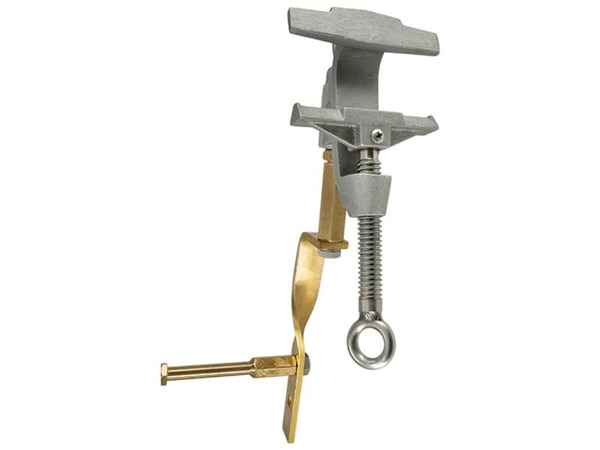
    We had this problem a number of years ago on what we term “22kv Bullhorn Carriers” with the first solution being to temp install hangers made from bent earthing rod and then hang the earth underneath but as this in not a clamped connection it is not suitable to carry any fault current. Now we use “Cut Out Earth Clamps” from Transnet installed with a shotgun or insulated stick. Further moving the earths away from the top live side and creating a clamped connection.

    https://www.transnet.co.nz/Cutout-Earth-Clamp

    Before this guys were hanging the earths directly on the lower carrier hanging point encroaching on the minimum gap to the top live side and also bending the lower hanger of the carrier.

    I hope this relates to the question asked.

    Cheers

    • This reply was modified 1 week, 1 day ago by  james prime.
    • Lance Brown

      Member
      20 February 2026 at 9:50 am

      Good morning James

      Thank you for your response.

  • Graeme Johnson

    Member
    24 February 2026 at 9:12 am
    • Lance Brown

      Member
      27 February 2026 at 8:05 am

      Good morning Graeme

      Thank you for your response. The video is helpful and describes the scenario clearly, this will definitely aid in our team discussions.

      Thank you again

Log in to reply.